

- The counter is a workspace, not a display surface — every object on it must justify its presence through daily use.
- The 3-item rule limits permanent counter occupants to three functional objects maximum per counter section.
- Objects earn counter space by frequency of use, not by visual appeal or sentimental value.
- Counter clutter is primarily an appliance storage problem — most appliances belong in cabinets, not on surfaces.
- A permanently clear counter is faster to clean, faster to use for prep, and lower in ambient cognitive load.
The kitchen counter is the most cognitively active surface in the home. It is used for food preparation multiple times daily, serves as a transit surface for groceries, mail, school bags, and miscellaneous objects in most households, and is the first surface seen on entering the kitchen. Its visual state sets the tone for the entire room. A cluttered counter makes a clean kitchen look disorganized; a clear counter makes an ordinary kitchen look considered.
The 3-item rule is a precision tool for managing counter occupancy. It is not a minimalist aesthetic principle — it is a functional protocol derived from how professional kitchen designers and chefs think about counter use. The rule: no section of counter holds more than three permanent occupants. Everything else either belongs in a cabinet, in a drawer, or off the counter entirely.
Why Counters Accumulate
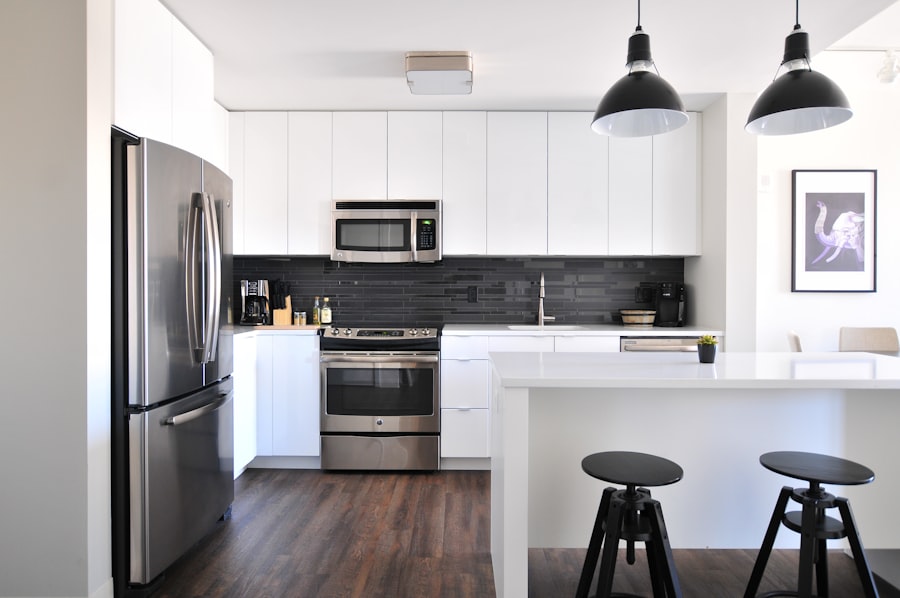
Counter accumulation follows a consistent pattern. It begins with one or two high-use appliances placed for convenience — the coffee machine, the toaster. These are rational decisions: daily use justifies counter presence. Over time, additional appliances are added on similar grounds. Then items begin appearing that are not appliances: a fruit bowl, a utensil holder, a bottle of olive oil, a mail pile, a charger. Each addition seems minor. Each one reduces available prep space, increases the cleaning time required for the counter, and adds to the visual complexity of the kitchen.
The critical failure point is the absence of a counter occupancy rule. Without one, each individual addition to the counter is a separately justifiable decision. The aggregate of those decisions produces a counter that nobody would have designed intentionally. The 3-item rule provides the occupancy limit that prevents this accumulation from occurring, without requiring periodic declutter sessions to correct the damage.
Applying the 3-Item Rule

The 3-item rule applies per counter section — typically defined as the stretch of counter between two physical breaks such as the sink, the stove, a corner, or a window. In most kitchens, this produces two to three sections of counter, each with a maximum of three permanent occupants.
An object qualifies as a permanent counter occupant if and only if it is used at least once daily. The coffee machine qualifies. The toaster qualifies in households that toast daily; in households that toast twice weekly, it does not. The bread box qualifies if bread is the primary daily carbohydrate. The stand mixer used on Sunday afternoons does not qualify regardless of its visual appeal. The rule is frequency-based, not aesthetic.
Apply the rule by first listing every object currently on each counter section. Then evaluate each object against the daily-use criterion. Objects that fail the criterion move to a cabinet, to a designated storage zone, or out of the kitchen entirely. From the objects that pass, select the three that are highest-frequency and most essential. Those are the permanent occupants. Everything else, including objects that passed the daily-use criterion but are not in the top three, moves to accessible cabinet storage — within arm’s reach, no lid required to retrieve.
The Appliance Cabinet System
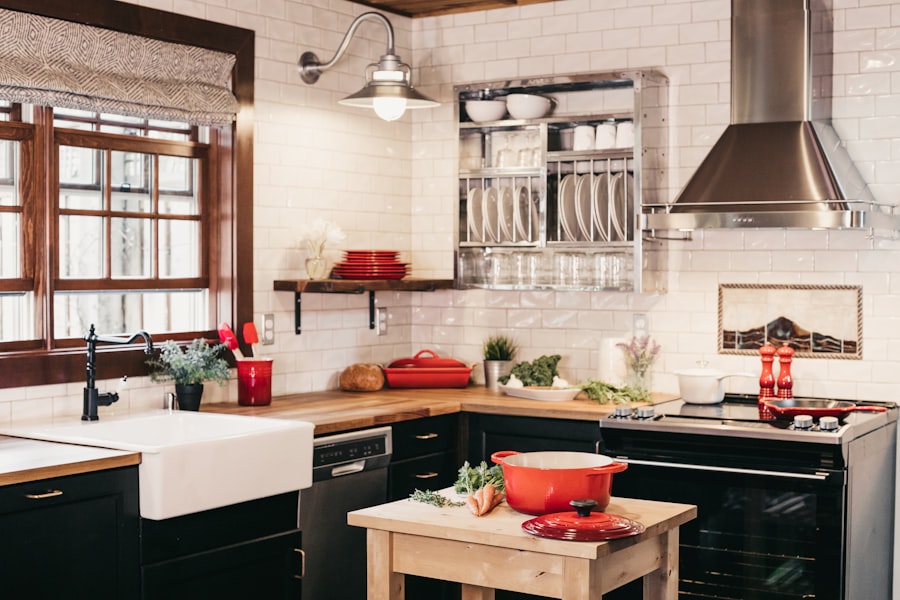
The primary objection to clearing counters is access friction: if the blender is in a cabinet, using it requires retrieval and return, which feels slower and less convenient than taking it from the counter. This objection is valid for daily-use appliances. For weekly or occasional-use appliances, the objection does not hold — the 20 seconds required to retrieve a blender from a cabinet is not a meaningful friction cost for an item used once a week.
The appliance cabinet system addresses the valid part of this objection by designing cabinet storage specifically for appliances: a deep lower cabinet with pull-out shelves or a tambour-door appliance garage at counter height. Pull-out shelves bring the appliance to the cabinet opening without requiring full removal. Tambour-door garages — roll-up door units built into the counter backsplash — provide immediate counter-accessible storage that is visually closed when not in use. Both solutions make appliance retrieval fast enough to be non-disruptive even for frequent use.
For the kitchen drawer and cabinet organization system that pairs with counter decluttering, our kitchen drawer organizer system guide covers the internal cabinet layouts that make off-counter storage genuinely accessible rather than theoretically convenient.
Styling the Three Permanent Occupants
Once the three permanent occupants are identified functionally, the aesthetic opportunity is to make them work visually as a deliberate grouping rather than an accidental collection. Three objects that share a material (all stainless, all ceramic, all wood), a finish (all matte, all gloss), or a color palette read as intentional. Three objects of unrelated material and finish read as accumulated by default, even if each is individually attractive.
If the functional occupants do not share visual characteristics, a simple unifying element — a small tray or a wooden board that the three objects sit on together — creates a visual grouping without requiring the objects to match. The tray serves the same compositional function as a rug does in a living room: it defines a zone and signals intentionality.
Maintaining the Clear Counter
The 3-item rule creates the limit. The daily reset maintains it. Every object that lands on the counter during cooking, grocery unpacking, or mail processing must leave the counter at the end of the activity or at the daily reset — whichever comes first. The counter is a workspace, not a deposit surface. Objects that consistently return to the counter after reset are not a reset problem; they are a storage problem. If something keeps landing on the counter, it is because no convenient off-counter home exists for it. Create the home and the behavior changes.
For the deep clean checklist that covers all kitchen surfaces including the counter, see our deep clean kitchen checklist. For the broader organizational system that supports a permanently clear kitchen, the zone-based kitchen layout in our room-by-room organization system covers the full prep-cook-serve-store framework.
The Counter Audit: A One-Time Reset Process
If the current counter state is well past the 3-item limit, the reset process follows a specific sequence that makes the evaluation less emotionally difficult. Remove every object from every counter section — place them all on the kitchen table or another large flat surface where they can be evaluated without the counter as context. With the counter completely clear, notice the visual effect: the room reads as larger, the counter reads as functional. This is the baseline the 3-item rule maintains. Now evaluate each removed object against the daily-use criterion before returning any of them. Objects that pass the criterion and fall within the three-per-section limit return; all others are stored or removed. The act of seeing the clear counter first makes it significantly easier to hold the standard when deciding what returns to it.
Most kitchens require this reset only once. After the initial audit, maintaining the 3-item rule requires only the daily reset habit — returning objects that land temporarily on the counter during cooking or unpacking — and an annual re-evaluation of whether the permanent occupants still qualify by the daily-use criterion. Appliances change with seasons and habits; the counter configuration should change with them rather than accumulating historical artifacts of previous routines.
What a Clear Counter Actually Changes
Beyond the visual effect, a permanently clear counter has three functional consequences that compound over time. First, prep speed increases: when the full counter surface is immediately available, food preparation begins without the step of clearing space. In a household that cooks daily, this elimination of the clearing step saves approximately two to three minutes per meal — roughly 12 to 18 minutes per week, or 10 to 15 hours per year. Second, cleaning time drops: a counter with three fixed objects takes under a minute to wipe; a counter with twelve objects takes four to six minutes of repositioning and wiping. Third, and most significant: the ambient cognitive load of the kitchen decreases. A clear counter is a resolved surface — every object has a decision behind it. An accumulated counter is a surface of deferred decisions, each one a minor but continuous claim on attention. The clarity is not merely visual.

Applied the 3-item audit to my kitchen this weekend. Found 14 objects on two counter sections. Eight failed the daily-use test immediately. Two more failed when I was honest about frequency. Four remain. The counter is unrecognizable. Cleaning it now takes 45 seconds instead of 4 minutes.
The framing of “objects earn counter space through daily use frequency” is the key shift. I was making decisions based on whether I liked the object, not how often I used it. Completely different evaluation. The blender I love but use weekly is now in a cabinet. The kettle I don’t notice is on the counter because it runs four times a day.
Jin-Ho — precisely. The frequency criterion removes the aesthetic variable from the decision entirely, which is what makes it work. Aesthetic appeal is too easy to rationalize. Frequency is measurable.
The tray as a unifying element for three functionally necessary but aesthetically mismatched objects is a simple fix I never thought of. Placed my coffee machine, kettle and utensil crock on a wooden tray. Same objects, completely different impression. The kitchen looks styled rather than accumulated.