

The average household spends over $600 a year on cleaning products — most of which are single-use formulations for specific surfaces that could be replaced by a handful of inexpensive natural ingredients. White vinegar, baking soda, castile soap, hydrogen peroxide, and lemon: these five ingredients, used correctly, can clean every surface in your home. They’re safer for your family, better for the environment, and significantly cheaper. Here’s exactly how to use them.
The Five Ingredients and What Each Does

Understanding what each ingredient does — and what it doesn’t — is the key to using them effectively. They’re not interchangeable: each has a specific chemistry that makes it ideal for certain surfaces and completely wrong for others.
“Natural doesn’t always mean gentle,” says Anne-Marie Bonneau, zero-waste chef and natural cleaning advocate. “Vinegar is genuinely acidic — it will etch natural stone. Hydrogen peroxide is a real oxidizer. Using these correctly matters as much as choosing them in the first place.” Understanding the basics of what you’re working with protects your surfaces and makes your cleaning more effective.
- White vinegar — acid; dissolves limescale, soap scum, and mineral deposits; kills most bacteria and mould; do not use on natural stone, cast iron, or wood
- Baking soda — mild alkali abrasive; deodorizes, lifts stains, and provides gentle scrubbing action; safe on most surfaces
- Castile soap — plant-based surfactant; cuts grease and lifts dirt; safe on virtually all surfaces including floors and fabrics
- Hydrogen peroxide (3%) — oxidizer; whitens, disinfects, and removes mould and mildew; safe on most surfaces, avoid mixing with vinegar
- Lemon juice — mild acid similar to vinegar; great for cutting grease and deodorizing; leaves a fresh scent and is safe on more surfaces than vinegar
The DIY Recipes That Replace Your Entire Cleaning Cabinet

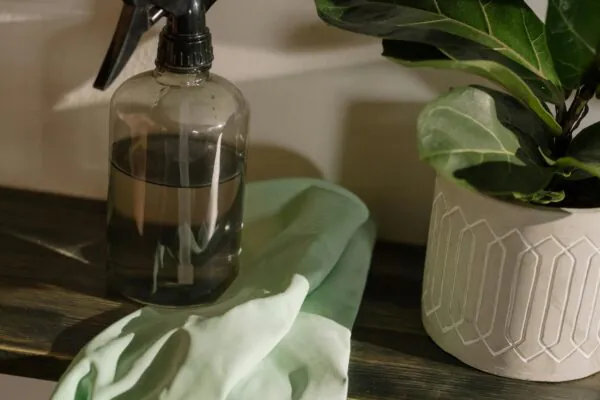
These five recipes, made in reusable spray bottles, replace the most common commercial cleaners in any home. Each costs pennies per batch to make:
- All-purpose spray: 1 cup water + 1 cup white vinegar + 10 drops tea tree oil — for counters, tiles, and most hard surfaces
- Glass and mirror cleaner: 2 cups water + ½ cup white vinegar + ¼ cup rubbing alcohol (70%) — streak-free on glass and mirrors
- Bathroom disinfectant: 1 cup water + 1 cup hydrogen peroxide — spray on surfaces, leave 5 mins, wipe clean
- Floor cleaner: 1 gallon warm water + ¼ cup castile soap + 10 drops lavender essential oil — safe on hardwood, tile, and laminate
- Soft scrub: ½ cup baking soda + enough castile soap to make a paste + 10 drops essential oil — for sinks, tubs, and stained surfaces
Kitchen Applications: Where Natural Cleaners Shine
The kitchen is where natural cleaning ingredients earn their reputation. Baking soda and vinegar together produce a chemical reaction — the fizzing you’re familiar with — that loosens grease and lifts stubborn stains. Used separately, they’re each effective; used in sequence (baking soda first, then vinegar spray), they’re more effective still.
For greasy cabinet doors, a solution of equal parts water and castile soap on a microfiber cloth cuts through cooking grease without leaving residue. For the microwave, half a lemon squeezed into a bowl of water, microwaved for 3 minutes until steaming, then left for another 5 minutes with the door closed — the steam and lemon acid loosens every splatter with zero scrubbing. According to Apartment Therapy’s cleaning team, this microwave method consistently outperforms commercial microwave cleaners in user testing.
- Oven: Baking soda paste overnight; vinegar spray to neutralize and wipe
- Microwave: Lemon + water bowl, 3 mins on high, 5 mins dwell, wipe clean
- Drain: ½ cup baking soda + ½ cup vinegar, 15 mins, flush with boiling water
- Cabinet doors: Castile soap + water on microfiber — follow wood grain
- Cutting boards: Coarse salt + half lemon — scrub, rinse, dry
Bathroom Applications: The Natural Cleaners That Beat Commercial Products

The bathroom is where natural cleaning ingredients perform most impressively against their commercial equivalents. Hydrogen peroxide on grout outperforms most commercial grout whiteners. Vinegar on limescale outperforms many descalers. And unlike commercial bathroom cleaners, none of these leave chemical residue near surfaces where you wash your face, brush your teeth, or give your children a bath.
- Toilet bowl: ½ cup baking soda + 1 cup vinegar — leave 30 mins, scrub, flush
- Showerhead limescale: Vinegar bag or shower cap overnight — dissolves completely
- Grout: Hydrogen peroxide spray, 15–20 min dwell, stiff brush scrub
- Mirror: Glass cleaner recipe above — streak-free result
- Mildew on sealant: Hydrogen peroxide, leave 30 mins, wipe — for persistent mould only, diluted bleach is more effective
The Cost and Environmental Case

Beyond effectiveness, the case for natural cleaning is also financial and environmental. The average UK household spends approximately £25–45 per month on cleaning products. The natural ingredients approach — five base ingredients bought in bulk — costs approximately £3–5 per month to cover the same cleaning needs. Over a year, that’s a saving of £240–480 without any reduction in cleaning performance.
The environmental argument is equally compelling. Commercial cleaning products represent significant plastic packaging waste, and their chemical ingredients eventually enter the water system. Bulk-bought natural ingredients in reusable bottles produce a fraction of the packaging waste. For guidance on eco-friendly home practices, Homes & Gardens and Apartment Therapy both have excellent resources on sustainable home management.


I switched to natural cleaning products two years ago after my youngest had a skin reaction to commercial cleaners. The baking soda and vinegar combination handles everything I need and honestly my house smells so much better without the chemical overlay. This article is a great confirmation that I haven’t been missing out on cleaning power.
One thing I’d add: adding a few drops of essential oil (tea tree or lavender) to your DIY all-purpose spray gives it an extra antimicrobial boost and makes the whole cleaning experience much more pleasant. Tea tree especially has really solid evidence behind it as an antimicrobial agent.
The castile soap tip for the floors was something I’d never tried. My laminate floors had this weird residue from the commercial cleaner I was using and switching to a few drops of castile soap in a bucket of warm water fixed it immediately. Much better result and no chemical smell.
Really important note in this article about NOT using vinegar on natural stone — I made that mistake with my marble bathroom countertop and it etched the surface. Wish I’d read this a year ago! For anyone with marble, granite, or travertine: stick to pH-neutral cleaners only.
The cost comparison at the end really puts it in perspective. I calculated what I was spending on cleaning products — about £45 a month — and compared it to the natural ingredients approach described here. The natural version works out to about £3 a month for the same coverage. That’s a huge difference over a year.
Do you have a recommendation for a good glass cleaner that’s still natural? The standard vinegar solution leaves a slight smell on my windows for a while and I’m looking for something that performs as well but without the lingering odour.