
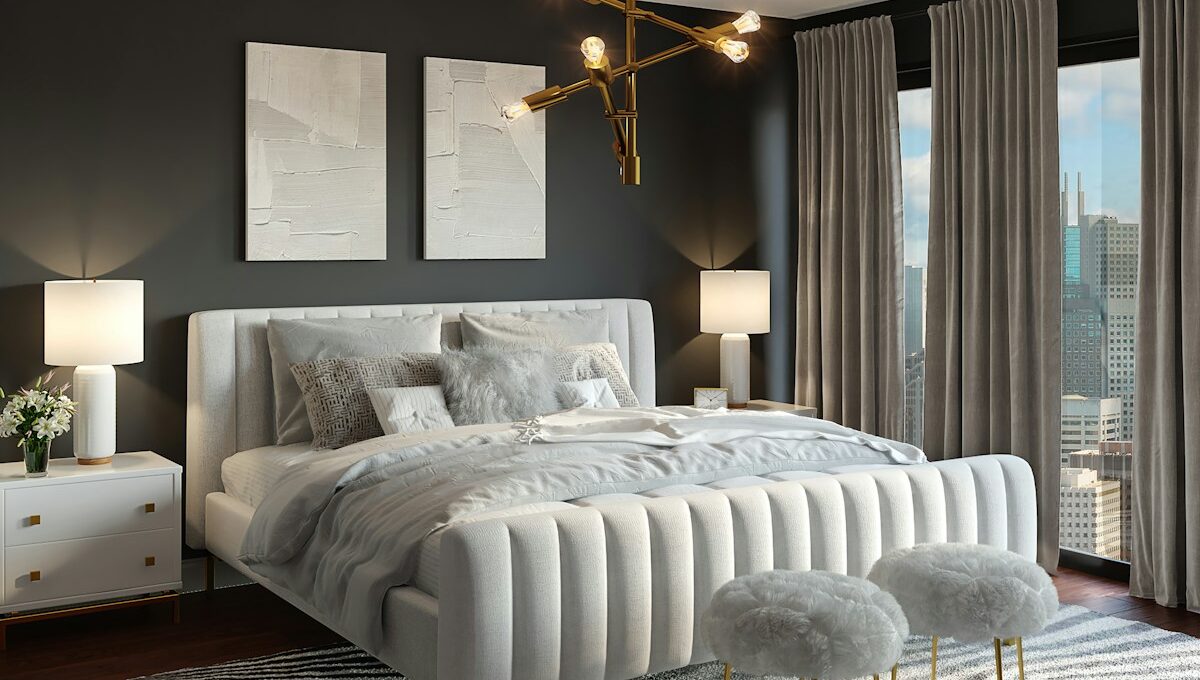
- Bedroom styling is primarily textile management — the bed occupies 40-60% of visual field and determines whether the room reads as calm or chaotic.
- Three textile layers on the bed — base, layer, accent — provide visual depth without visual complexity.
- Cushion count has a direct ceiling: two to four cushions maximum for a double bed, never more than one per pillow plus two decorative.
- All non-bed surfaces follow the three-object rule; the bedroom floor must be completely clear.
- Natural materials — linen, cotton, wool — photograph and read better than synthetic alternatives at every price point.
The bedroom is the room where styling has the most direct relationship with daily psychological state. It is the first environment processed on waking and the last processed before sleep. Its visual complexity — or calm — is not a passive backdrop to the morning and evening; it is an active input to mood, cortisol level, and sleep onset quality. Styling the bedroom is therefore not a decorating exercise. It is an environmental design decision with measurable daily consequences.
The guide that follows addresses bedroom styling from the perspective of calm: what configuration of textiles, surfaces, and objects produces the restful visual baseline that the bedroom should maintain.
The Bed: Three Layers, Not More
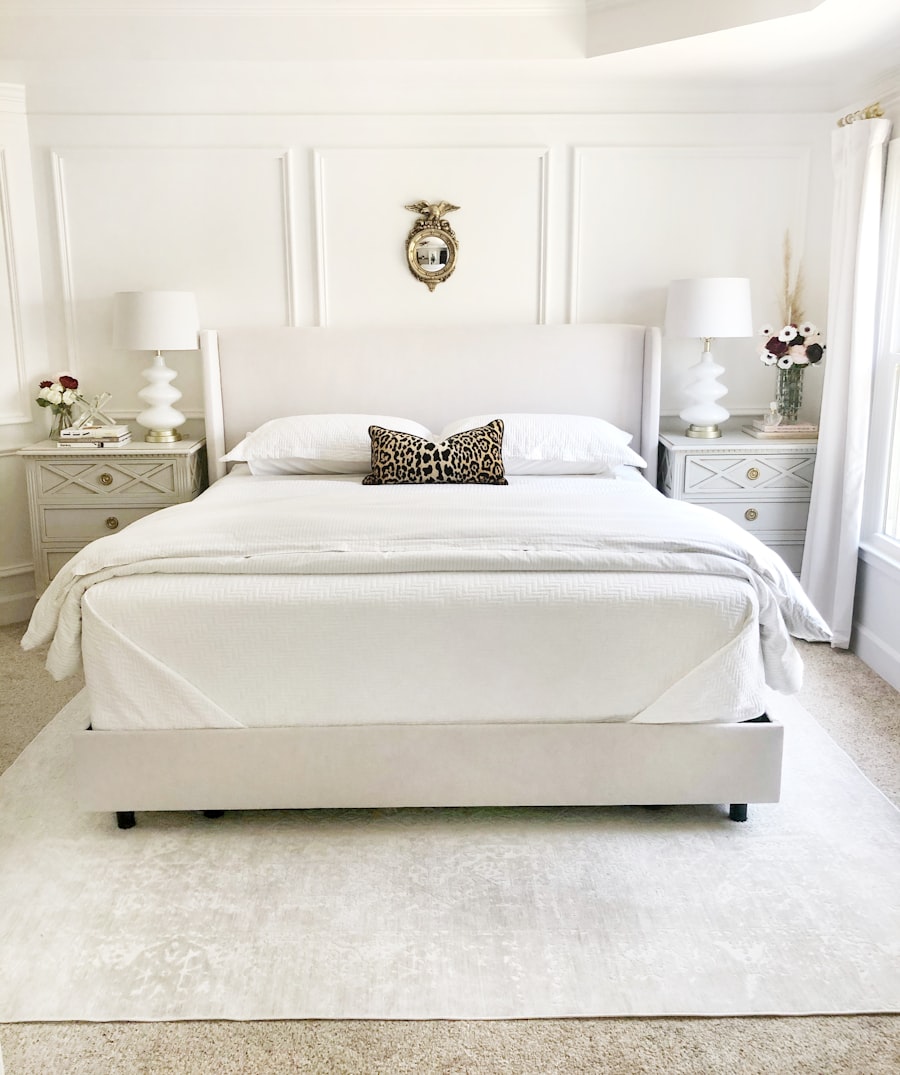
The bed occupies between 40% and 60% of the visual field on entering most bedrooms. Its styling state determines whether the room reads as calm or as disordered before any other surface is registered. The most reliable bed styling formula uses exactly three textile layers.
Layer 1 — Base: The fitted sheet and pillowcases in a solid colour or minimal pattern. White and natural linen tones are the most visually neutral choices and the most compatible with the widest range of secondary layers. Avoid bold patterns at this layer — the base layer is the ground against which the upper layers read.
Layer 2 — Middle: The duvet or quilt. This is the largest visible textile surface on the bed and the strongest contributor to the room’s colour palette. Select it in the secondary or dominant colour of the bedroom palette. Natural linen or cotton percale wrinkles in a way that reads as relaxed rather than unkempt; synthetic alternatives at lower thread counts read as crumpled rather than effortful. The difference in visual quality between a linen duvet cover and a polyester equivalent is visible from the bedroom doorway.
Layer 3 — Accent: A folded throw positioned at the foot of the bed. This adds the third colour or texture without adding visual complexity — it occupies a defined zone (foot of bed) and has a defined visual weight (folded, not draped). A waffle-weave cotton, a lightweight wool, or a woven blanket in a texture that differs from the duvet provides the sensory and visual contrast that makes the bed look intentionally styled rather than simply made. This layer also serves a functional purpose: available for additional warmth without disrupting the bed’s daytime appearance.
Cushion Discipline
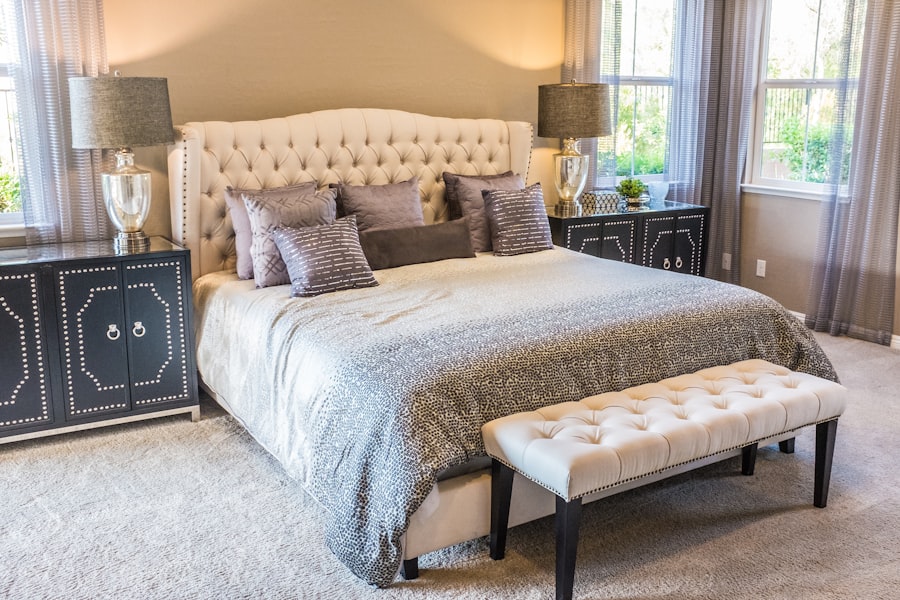
Cushion count is the variable that most consistently separates hotel-room calm from domestic clutter on a bed. The formula is straightforward: one sleeping pillow per person (placed against the headboard), plus a maximum of two decorative cushions in front. On a double bed, this produces four cushions total. On a single, two or three. More than this produces a bed that requires significant effort to prepare for sleep each night — effort that either gets done resentfully or gets skipped, producing the permanent half-made state that signals visual disorder.
The two decorative cushions should differ from the sleeping pillows in size (smaller, approximately 45cm square) or in texture, to create the visual layering effect. They do not need to match each other perfectly — a slight variation in tone or weave reads as intentional. They do need to belong to the same colour family and undertone direction as the rest of the room’s palette.
Bedside Surfaces
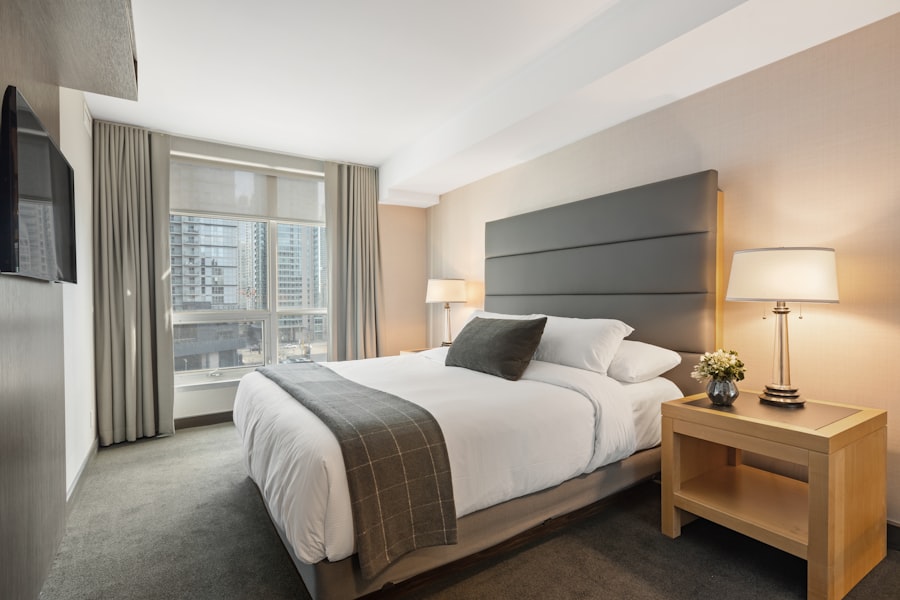
The bedside surface holds three objects: a lamp, the current reading material, and a glass of water. This is the functional minimum and the visual maximum. Everything beyond these three — phone, glasses case, multiple books, hand cream, medication, charging cables, receipts, earplugs — belongs in the bedside drawer, not on the surface. The drawer is not a storage failure if it contains these items; it is the system functioning correctly.
The lamp is the most important styling object on the bedside because it provides both function (reading light) and visual grounding (a vertical element at a consistent height on both sides of the bed). Matching lamps on both bedsides — same height, same shade — produce symmetry that reads as settled and deliberate. Mismatched lamps of different heights produce visual asymmetry that the eye reads as unresolved.
Walls and Art in the Bedroom
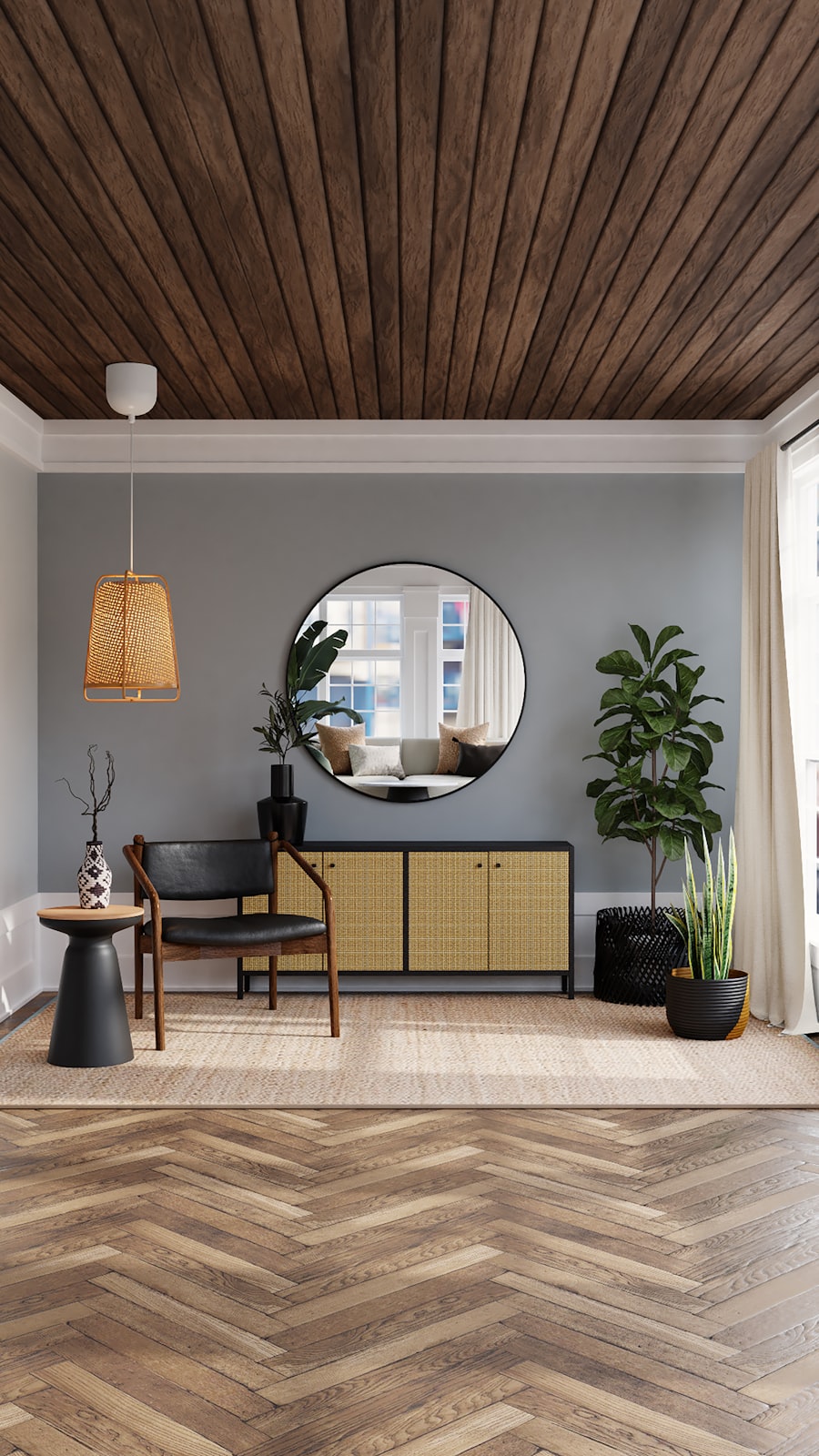
Bedroom walls should be treated with more restraint than living room walls. The bedroom is a rest environment; visual complexity on the walls competes with sleep onset in the same way that screen use before sleep does — it provides stimulation when the environment should be providing deactivation. A single large-format work above the headboard as the room’s primary visual focal point, with all other walls left clear or treated with a single subtle texture, is the configuration most compatible with the bedroom’s neurological function.
Gallery walls, multiple framed prints, and collections of objects on bedroom walls are decoratively interesting but functionally counter-productive in a space designed for sleep. If personal art is important to display, the bedroom is the lower-priority location; living rooms, studies, and hallways are more appropriate environments for dense visual interest. For the broader bedroom storage and organisation system that keeps surfaces clear and supports this styling approach, our bedroom storage optimisation guide covers every zone in systematic detail.
Lighting: The Mood Variable
Overhead lighting in a bedroom is the single greatest obstacle to bedroom calm. A bright central fixture illuminates the room uniformly and activates the visual cortex in the same way that daylight does — signalling wakefulness rather than rest. The bedroom should have no overhead lighting in its evening operating mode. Two bedside lamps with warm-toned bulbs (2700K to 3000K colour temperature, below 40 watts equivalent) provide sufficient light for reading and movement while producing the warm, directional light that signals the transition to rest.
If overhead lighting cannot be removed (rental property, no dimmer switch), fit the existing fixture with the lowest-wattage warm-tone bulb it will accept and use bedside lamps as the primary light source from the evening onwards, leaving the overhead switched off. The ambient light quality in the bedroom at 10pm determines sleep onset time more directly than most sleep hygiene interventions that are significantly more effortful.
Floor and Storage: The Foundation of Bedroom Calm
All styling decisions in the bedroom are secondary to one operational requirement: the floor must be completely clear. A bedroom floor covered in clothing, bags, shoes, and displaced objects from other rooms cannot be styled into a calm environment regardless of the quality of the bedding, the lighting, or the art. The floor is the single most impactful variable in bedroom visual calm — more than wall colour, more than textile selection, more than any styling choice.
Achieving a clear floor permanently requires adequate storage for everything that would otherwise occupy it. The primary culprits are clothing (no dedicated laundry path between wardrobe and hamper), bags and accessories (no designated hook or shelf at the bedroom entry point), and objects that belong in other rooms but have accumulated in the bedroom by default. The storage and organisational system that addresses each of these is covered in our bedroom storage optimisation guide, which covers every zone from wardrobe interior to under-bed to door storage. Styling the bedroom without solving the storage is styling a surface without addressing its foundation.
Maintaining the Styled Bedroom
A styled bedroom requires a daily maintenance protocol of approximately three minutes: the bed made to its three-layer configuration each morning, the bedside surface returned to its three-object limit, and the floor verified clear. This is not a cleaning routine — it is the operational cost of having a styled bedroom, and it is lower than most people expect. A bed made once takes under three minutes; an unmade bedroom created by skipping three minutes compounds into a room that takes 20 minutes to restore. The investment is asymmetric in favour of the daily habit. For the complete daily reset system that integrates bedroom maintenance with the rest of the home, our 15-minute morning reset guide covers the full sequence and anchoring strategy.
The three-layer bed formula changed my entire approach to bedding. I had been adding cushions and layers until the bed looked “luxurious” — which turned out to mean visually busy. Reduced to three layers and four cushions. The bed now looks like a hotel rather than a department store display. Less is genuinely more in this context.
The overhead lighting point was the most actionable insight. I had been sleeping poorly for two years in a room with a bright ceiling light. Changed to bedside lamps only from 9pm onwards. Sleep onset time dropped from 45 minutes average to under 15 within two weeks. The environment was the variable; the lighting within it was the specific cause.
David — the 2700K warm light signal is well-documented in sleep research as one of the more reliable environmental cues for melatonin onset. Most people underestimate the impact because the light change feels minor. The effect on sleep onset time is consistent and significant. Very glad it helped.
The matching bedside lamps advice is something I dismissed as overly prescriptive until I tried it. I had mismatched lamps for three years and always thought the asymmetry was “characterful.” Replaced both with matching ceramic table lamps at the same height. The room reads as settled in a way it never did before. Symmetry in a bedroom is not boring — it is structurally calming.