

Clutter isn’t just a visual problem — it’s a mental one. Research from Princeton University found that physical disorder in our environment competes for our attention and reduces our ability to focus. A UCLA study of family homes found that elevated cortisol levels in mothers were directly correlated with the density of objects in the home. In other words, all that stuff isn’t sitting quietly in the background — it’s costing you energy every single day. Here’s how to get rid of it, room by room, in a way that actually lasts.
Before You Start: The Mindset Shift That Changes Everything

Most decluttering attempts fail before they begin — not because of a lack of motivation, but because of the wrong framing. If you approach decluttering as “getting rid of things,” every decision becomes a small loss, and decision fatigue sets in fast. Reframe it as making room — room for the things you actually use, the spaces you want to live in, and the calmer version of your home you’re working toward. That shift changes the emotional weight of every single decision.
“The goal of decluttering isn’t to own as little as possible,” says professional organizer and author Peter Walsh, who has worked with thousands of clients on home organization. “It’s to own intentionally — to surround yourself only with things that support the life you’re actually living right now.” That distinction matters. You’re not minimizing for its own sake. You’re editing for function.
Before you touch a single object, do two things: take before photos of every space (the visual comparison later is genuinely motivating), and set up your four sorting zones — Keep, Donate, Sell, and Trash. Every item gets a zone. No “maybe” pile. The maybe pile is just clutter with extra steps.
- Take before photos — the contrast with your after shots will keep you going
- Four zones only: Keep / Donate / Sell / Trash — no fifth “maybe” category
- Start small: One drawer, one shelf, one corner — not the whole room
- Time-box it: 20–30 minute sessions beat one overwhelming all-day attempt
- Tell someone: Accountability makes a measurable difference in follow-through
01. Clothing: The Category That Reveals the Most

Clothing is the recommended first category in the KonMari Method for a reason: decisions are relatively straightforward, results are immediately visible, and the volume shock of seeing every piece of clothing you own in one pile is clarifying in a way that nothing else is. Most people genuinely don’t know how much they own until they pull it all out at once.
The decision framework that works consistently: the one-year rule. If you haven’t worn it in the past 12 months and you don’t have a specific, upcoming occasion that requires it — it goes. Not someday, not “when I lose a bit of weight,” not “it might come back in style.” It goes. Apply this without exceptions and you’ll typically remove 30–50% of a wardrobe on the first pass.
“When clients see everything they own in one pile, the usual reaction is disbelief. They had no idea. That’s the moment that makes the whole process possible — once you see the volume, the decisions become much easier.”
— Regina Lark, PhD, professional organizer and founder of A Clear Path
- Pull everything out — every item, from every room in the house, into one pile
- One-year rule: Not worn in 12 months + no specific upcoming occasion = donate
- Don’t keep guilt items: A gift you don’t like and never wear is not serving anyone in your wardrobe
- Upgrade your hangers: Switch to uniform slim velvet hangers — it makes the remaining wardrobe look intentional immediately
- Fold vertically for drawers: the KonMari vertical file-fold technique saves drawer space and means you can see everything at a glance
02. Kitchen: Declutter the Most-Used Room First for Maximum Impact
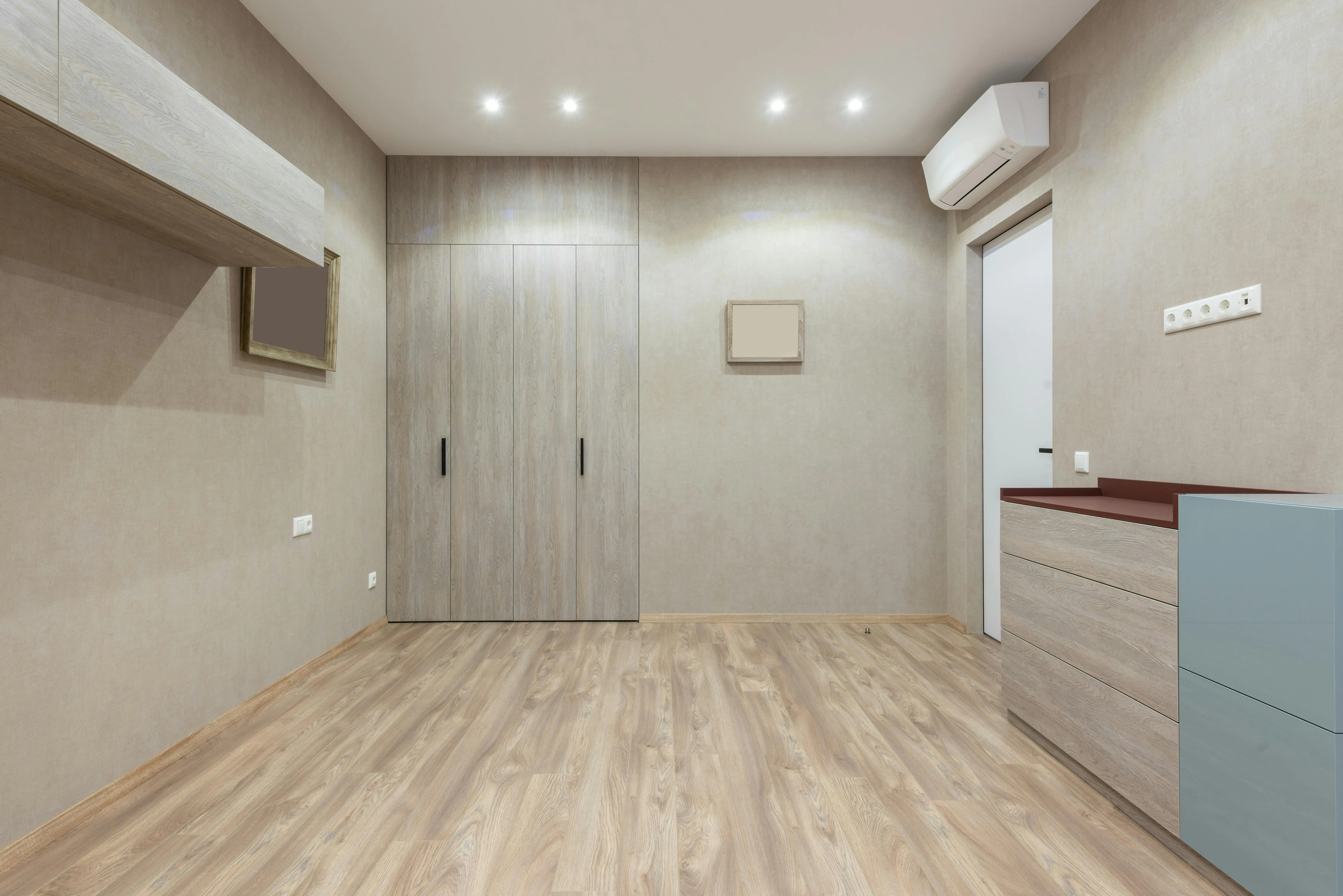
The kitchen accumulates clutter differently from other rooms — it’s not usually emotional attachment that’s the problem, it’s the slow accumulation of duplicates, aspirational gadgets, and expired items that arrived gradually and stayed indefinitely. A kitchen declutter is actually the easiest category emotionally, and one of the highest-impact ones visually, because you spend more time in this room than almost anywhere else.
According to a survey by Real Simple and professional organizers, the kitchen items people most frequently keep but never use are: specialty appliances used fewer than three times, duplicate cooking tools, and mismatched food storage containers without matching lids. Sound familiar? The rule here is simple: if you haven’t used it in six months and it doesn’t serve a specific annual occasion, it’s not earning its space.
- Expired food first — toss everything past its date from the pantry and fridge, no hesitation
- The appliance audit: Daily use = stays on counter. A few times a week = accessible cabinet. Rarely = donate it
- Duplicate tools: Keep the best one. You don’t need four spatulas.
- Mismatched containers: If it doesn’t have a matching lid in this drawer, it leaves this drawer
- Counter rule: Only daily-use items earn the surface — everything else lives behind a door
03. Paper: The Clutter That’s Hardest to See

Paper is the most insidious form of clutter because it looks like it might be important. So it sits. In a pile on the desk, in a stack on the kitchen counter, in a drawer that used to be organized and is now a compressed archive of three years of mail. The problem isn’t that people are disorganized — it’s that paper has never been given a real system, so it defaults to “somewhere flat.”
The fix is a three-zone paper system that forces every piece of paper to a decision the moment it enters the house. Zone 1: Inbox tray — anything incoming, dealt with within the week. Zone 2: Active folder — current projects and documents in use right now. Zone 3: File or shred — completed documents either go in a labeled physical file or get scanned and shredded. According to Apartment Therapy’s organizing experts, most households can shred or recycle approximately 80% of the paper they currently have “just in case.”
“People keep paper because they’re afraid of needing it later and not having it. But the reality is that most documents are either available digitally or replaceable. Fear of needing something someday is not a good enough reason to keep it.”
— Julie Morgenstern, organizing expert and author of Organizing from the Inside Out
- Shred immediately: Anything with personal information that you don’t need to keep
- Scan to keep digitally: Receipts, warranties, insurance documents — a free scanning app works fine
- Recycle freely: Old magazines, catalogues, takeout menus, anything more than 6 months old that isn’t financial or legal
- The inbox rule: Nothing sits in the inbox for more than one week — it gets actioned, filed, or tossed
- Go paperless: Switch bills, bank statements, and subscriptions to digital delivery and the problem stops at the source
04. The Donate Box — Why It Has to Leave Today

This is the step where most decluttering stalls out. The decisions are made, the bags are packed, the donate pile is huge — and then it sits by the front door for two weeks. Or three. And then items start migrating back out of the bag because you “might actually need that.” The donate bag in the hallway is not donating. It is clutter with better intentions.
The rule that professional organizers universally recommend: the moment a bag or box is full, it goes to the car. Not the hallway. The car. The next time you drive past a charity shop, it goes in. Same day is better than next week, always. If you’re selling items, give yourself a hard deadline — list within 48 hours or it goes to donate. Research consistently shows that delayed action on decluttered items results in significant re-accumulation within a few weeks.
- Full bag = car — not the hallway, the car. This is the most important rule.
- Charity shop or scheduled collection: Many charities offer free home collection pickups — book one before you start decluttering
- Selling deadline: List within 48 hours or donate. The item’s value isn’t worth the mental overhead of an ongoing “to sell” pile
- Friends and family: If you know someone who’d want something, message them before it leaves — but give them 24 hours to respond before donating anyway
- No take-backs: Once something is in the donate bag, it stays there
05. The Spaces Everyone Forgets
The big categories — clothing, kitchen, paper — get the attention. But the spaces that quietly accumulate the most friction are the ones no one thinks to address: the bathroom cabinet full of expired products, the junk drawer that hasn’t been opened with purpose in months, the “catch-all” chair in the bedroom, the digital clutter on your phone and computer that mirrors the physical clutter in your home.
These smaller spaces take 20–30 minutes each and the improvement is immediate. A survey by Homes & Gardens found that the bathroom cabinet is one of the most frequently cited sources of “low-level daily frustration” in the home — largely because expired products, duplicates, and items that belong elsewhere have never been edited. Give each of these spaces a targeted 20-minute session and they’ll change how the whole home feels.
- Bathroom cabinet: Toss anything expired (check PAO symbols on skincare), anything you tried and didn’t like, anything with no home
- The junk drawer: Keep only things that genuinely have nowhere else to go — everything else gets rehomed or tossed
- The catch-all chair: Give every item currently on it either a real home or a donation bag. Then protect the chair.
- Digital declutter: Delete unused apps, clear your phone’s camera roll of duplicates and blurry shots, empty the Downloads folder
- Under the bed: Should be seasonal storage only — not a general overflow zone
The Habit That Keeps It Gone
Decluttering is a project. Staying decluttered is a habit. The two require different things. The project needs a committed session, a clear system, and a ruthless decision-making framework. The habit needs one simple daily action: a 10-minute evening reset where everything gets returned to its home before you go to bed.
The other habit that prevents re-accumulation is the one-in-one-out rule: every time something new enters your home, something leaves. Not eventually. At the point of purchase, or at the latest that week. This single rule, applied consistently, means your home never requires another full declutter again — just ongoing, light maintenance.
The research is clear on this: the benefit of a decluttered home isn’t just visual. It’s the reduced cognitive load of not managing excess, the lower cortisol of a calmer environment, and the daily time saved when everything you own has a home and you can always find it. That’s not a small thing. Start today. One drawer. Twenty minutes. Go.
Sources & Further Reading
- The KonMari Method — Official Guide (konmari.com)
- 5 Decluttering Rules Professional Organizers Would Never Break — Real Simple
- 20 Seriously Clever Small Space Storage Ideas — Apartment Therapy
- The 21 Best Organizing & Storage Hacks of All Time — Apartment Therapy
- 25 Closet Organization Ideas from Professional Organizers — Homes & Gardens
- 50 Foolproof Closet Organization Ideas for Any Wardrobe — PODS Blog



This is exactly the push I needed! I’ve been putting off tackling my wardrobe for months. The ‘one-year rule’ is so simple but I always talk myself out of using it. Bookmarking this to read again on Saturday when I finally attempt the clothing pile. 😅
The paper clutter section really hit home. I have a ‘temporary pile’ on my desk that has been there since November. The inbox tray idea sounds so obvious now that I read it — I genuinely never thought to give it a dedicated spot. Picking one up this week.
Just wanted to say the donate box tip changed my life last year. I finally started putting the bags directly in my car instead of leaving them by the door, and things actually started leaving my house! The number of donation bags that lived in my hallway for weeks before… embarrassing. Great article.
Really appreciate the data point about clutter and cortisol levels — I’d heard this vaguely but never seen it cited properly. Sent this article to my partner who has been skeptical about spending a weekend decluttering. I think the science angle might actually convince them! The 20-minutes-a-day approach also feels way more manageable than blocking out a full day.
I did a full kitchen declutter last month using roughly this method and honestly the difference is unreal. I donated three bags of duplicate tools and things I’d never used, and now I can actually find everything. The before/after photos I took were hilarious — couldn’t believe how much I’d accumulated. Highly recommend anyone take photos before they start, the comparison is very motivating.
Quick question — do you have any advice for decluttering sentimental items? That’s always where I get completely stuck. I can breeze through clothes and kitchen stuff but the moment I get to photo albums and old gifts I just freeze. Would love a whole article on that topic if you have one planned!