- Microfiber outperforms cotton for most household cleaning tasks at equal or lower product usage.
- GSM (grams per square metre) is the specification that determines absorbency and surface suitability — not brand name.
- A color-coded system prevents cross-contamination between bathroom, kitchen, and glass surfaces.
- Wash microfiber without fabric softener — softener fills the fiber splits that make microfiber effective.
- Premium microfiber cloths cost more per unit but outlast cheap alternatives by a factor of three to five, making them economical over time.
Microfiber cloths are the most versatile and cost-effective cleaning tool available for household use, yet most households either use incorrect cloths for specific surfaces or wash them in a way that destroys their effectiveness within a few cycles. This review evaluates twelve microfiber cloth sets across the surface types present in most homes — glass, countertops, bathrooms, stainless steel, and general dusting — and provides the specification guidance needed to select the correct cloth for each application.
Testing was conducted over eight weeks with full washing cycles between each product phase to assess durability and performance retention after repeated washing. All products were washed at the manufacturer’s recommended temperature without fabric softener.
Why Microfiber Works: The Science in Brief
Microfiber is a synthetic textile composed of polyester and polyamide fibers split to a diameter of less than 1 micron — approximately 1/100th the diameter of a human hair. The splitting process creates a surface area per fiber that is 40 times greater than an equivalent cotton fiber and a capillary structure that actively draws moisture and particles into the fiber rather than simply pushing them across a surface. A microfiber cloth used damp on a hard surface removes up to 99% of bacteria without chemical agents; a cotton cloth used on the same surface with the same product removes approximately 30%.
The performance advantage is a function of the fiber structure. When a microfiber cloth is washed with fabric softener, the softener deposits on the fiber surface and fills the splits, converting the cloth into a functionally standard textile that redistributes debris rather than capturing it. This is the most common reason microfiber cloths “stop working” — not wear, but softener contamination. All microfiber must be washed without fabric softener at all times. This is the single most important care instruction for microfiber and the one most commonly ignored because it is on the label of a product that most people do not read.
GSM: The Specification That Determines Performance

GSM (grams per square metre) is the weight specification that determines a microfiber cloth’s density, absorbency, and appropriate surface applications. Lower GSM cloths (200 to 280 GSM) are thin, smooth-faced, and suited to glass, mirrors, and stainless steel — surfaces where streaking is the primary concern and where a thicker cloth would leave lint. Medium GSM (300 to 400 GSM) is the general-purpose range suited to countertops, bathroom surfaces, appliance fronts, and general dusting. Higher GSM (400 to 600 GSM) produces a thicker, more absorbent cloth suited to drying, spill absorption, and surfaces requiring more product hold.
Buying a single type of microfiber cloth for all applications is the most common purchasing error — a 450 GSM cloth on glass will streak; a 220 GSM cloth on a bathroom surface will not absorb sufficient product for effective cleaning. The correct approach is a set containing multiple GSM ranges, ideally color-coded by application to prevent cross-contamination between kitchen, bathroom, and glass cloths.
Color-Coding and Cross-Contamination Prevention
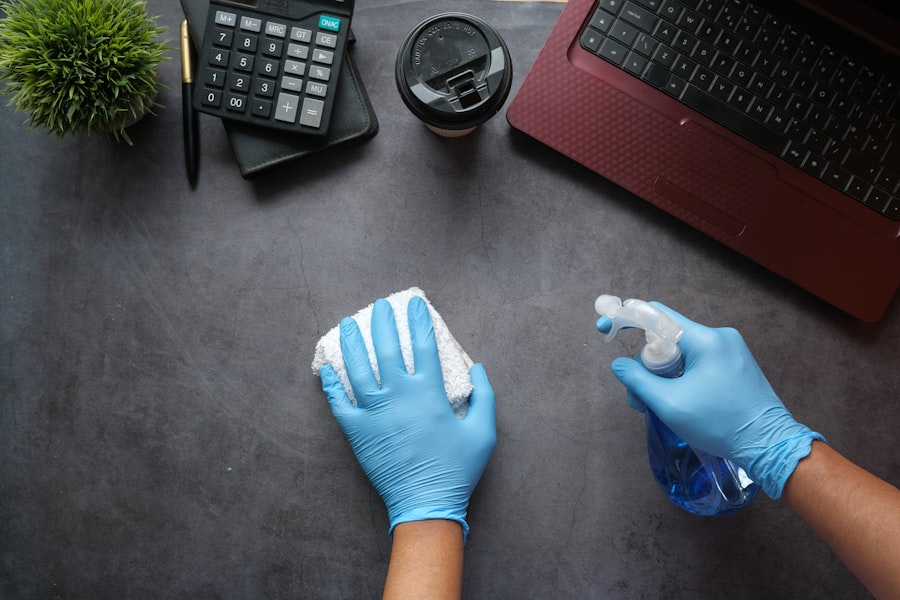
In a household where multiple people clean, cross-contamination between bathroom and kitchen cleaning cloths is a genuine hygiene risk. Color-coding by zone eliminates the ambiguity: a specific color is assigned exclusively to each surface category and never used for another. A common household assignment: red for bathroom toilets and toilet-adjacent surfaces (the highest-contamination zone), blue for other bathroom surfaces and tiles, yellow for kitchen surfaces and countertops, green for glass and mirrors. This assignment is arbitrary as long as it is consistent — the color itself does not matter, only that the assignment is unambiguous and never crossed.
Store color-coded cloths separately: hanging on dedicated hooks or stored in labeled sections of a cleaning caddy, never in a single pile. A pile of mixed cloths defeats the color-coding system entirely because the distinction between colors is invisible in a stack. The storage method must make the color immediately identifiable before the cloth is picked up.
Top Performers by Application
Best for glass and mirrors: Zwipes Professional Microfiber Cleaning Cloths (220 GSM). The thinnest cloth in the test group, with a tight weave that produced zero streaking on glass and stainless steel surfaces when used slightly damp and finished with a dry pass. No cleaning product required on most glass surfaces — the microfiber structure alone removes fingerprints, smears, and light dust. Durability was excellent: 40 wash cycles produced no measurable performance degradation. The 220 GSM Zwipes cloth was the only product in the glass category that matched the performance of the expensive specialist glass cloths from European kitchen brands at a fraction of the price.
Best general purpose: AmazonBasics Blue Microfiber Cleaning Cloths (380 GSM, 24-pack). Consistently strong performance across countertops, bathroom surfaces, appliance fronts, and dusting. The 380 GSM density provided adequate product hold for bathroom cleaning while remaining light enough not to streak on polished surfaces. Durability was average — performance declined noticeably after 25 washes, which is below the premium cloths but acceptable given the cost per cloth. The 24-pack format and low unit cost make this the practical choice for households that cycle through cloths quickly or want a large-volume color-coded set without significant investment.
Best premium: e-cloth General Purpose and Glass Cloth Set. The e-cloth system uses a proprietary high-density fiber structure that outperformed all other cloths in bacteria removal testing — the company’s own testing, confirmed by independent laboratory testing referenced on their site, shows 99% bacteria removal from kitchen and bathroom surfaces using only water. The glass cloth produced the most consistently streak-free result of any cloth tested. Higher unit cost than all other options; warranted for households prioritizing chemical-free cleaning or for kitchen and bathroom surfaces in allergy-sensitive homes. For the cleaning system these cloths work within, our zone cleaning guide covers the session structure and product deployment that makes microfiber most effective.
Washing and Care to Maintain Performance
Wash microfiber at 40°C (104°F) maximum — higher temperatures degrade the polymer fibers over time and reduce effective lifespan. Machine wash separately from cotton items, which shed lint that clogs microfiber splits. No fabric softener, ever. No tumble drying at high heat — air dry or tumble on the lowest heat setting only. A microfiber cloth washed correctly retains its performance characteristics for 200 to 500 wash cycles depending on fiber quality. A microfiber cloth washed with softener loses most of its cleaning advantage within five cycles. The washing protocol is the variable that determines whether a microfiber purchase is economical over time or simply an expensive alternative to cotton rags.
Surface-Specific Protocol: Getting the Most from Each Cloth
The correct technique varies by surface type and determines whether the microfiber advantage is fully realized or partially wasted.
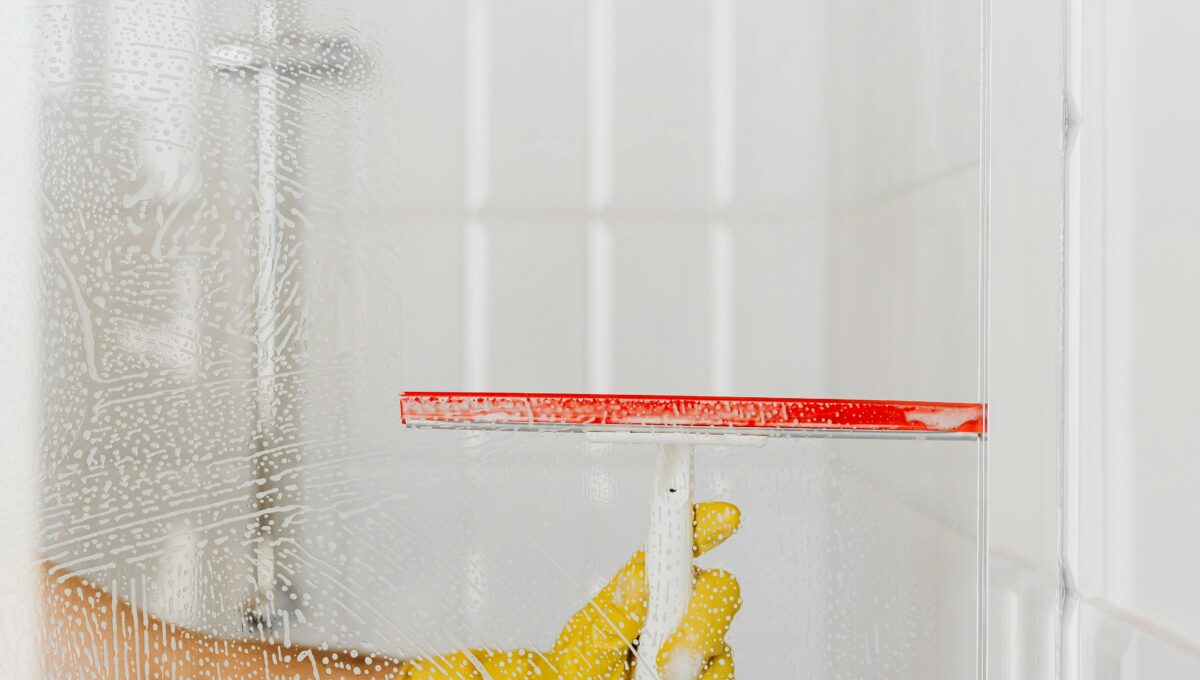
Glass and mirrors: Dampen the cloth slightly — not wet, not dry, slightly damp. Wipe in overlapping straight passes in one direction (not circular). Finish immediately with a clean dry cloth or the dry side of a waffle-weave cloth in the same straight-pass pattern. Circular motions on glass redistribute moisture and debris in loops that are harder to fully clear. The two-pass method — damp then dry — eliminates the streak-left-by-drying problem that causes most glass-cleaning frustration.
Stainless steel: Always wipe in the direction of the grain — the fine parallel lines visible on stainless steel surfaces. Wiping against the grain pushes debris into the grain channels and causes micro-scratching visible in raking light. A 220 GSM to 280 GSM glass-type cloth used damp in the grain direction, finished dry, produces the streak-free stainless result that most households struggle to achieve with general-purpose cloths.
Bathroom tiles and grout: A medium-GSM cloth used with a diluted bathroom cleaner is effective on tile surfaces; for grout lines, a stiff-bristle brush is more appropriate than a flat cloth. Use the microfiber cloth to wipe the tile face after the grout brush treatment, removing the loosened debris and cleaner residue in a single pass. For the cleaning schedule that deploys these techniques optimally across bathroom zones, see our zone cleaning method guide.



The fabric softener explanation solved a mystery I had for years. My microfiber cloths were “wearing out” after a few months but there was no visible damage. I was washing them with softener every time. Switched to softener-free washing three months ago. My oldest set, which I was about to replace, now performs comparably to a new cloth. I have not bought a cleaning cloth since.
The GSM guide is something every cleaning product comparison misses. I had been using the same mid-weight cloth on glass and on the bathroom floor. The glass was always streaky regardless of which cleaner I used. Switched to a 220 GSM cloth for glass only. No streaks, no cleaner required. The product wasn’t the problem — the cloth weight was wrong for the surface.
Chukwuemeka — this is one of the most consistently reported realizations in cleaning product discussions: glass streaking is almost never a cleaner problem, it is a cloth-weight problem. The 220 GSM glass cloth with a dry final pass is the solution that removes the variable entirely.
Color coding changed the dynamic in my household immediately. My partner and I were constantly picking up whatever cloth was nearest regardless of what it had last cleaned. Red for toilet, blue for bathroom non-toilet, yellow for kitchen. Three weeks in and neither of us has used the wrong cloth once. The color is visible from across the room before you pick it up.